Customer stories → FortNine

Product pages built for the feed, rebuilt around the rider, measured in add-to-cart
FortNine sells motorcycle parts and gear across Canada, one of four retail brands in the group. Its product team ran Zenyt’s buyer personas over the live catalog, rebuilt the helmet page template, and measured the result.




The problem
Pages built for the feed, not for the rider
Most of what a rider reads on a FortNine product page arrives from a supplier: a feed, sometimes a PDF. A page goes live when the fields the schema requires are filled. The schema never asks whether the person holding the helmet can decide on that page, so pages ship technically complete and practically silent on weight, certification, fit and fitment. Each gap costs the same way: the rider hesitates, opens another tab, and the page loses its add-to-cart.
At this scale nobody reads every page by hand: the fitment filter alone lists 16,242 parts. Zenyt reads the live catalog the way specific buyers do: a sport rider comparing two helmets, a commuter sizing a jacket, a parts buyer checking a kit fits a given model and year. Each finding names what that buyer could not do. Three of them, from August 2026:
Sizing
A riding-jacket page
The size-chart link opened an empty overlay. No measurements, no armor fit.
Street commuter
Comparison
A full-face helmet page
Sold as the brand’s lightest, with no weight anywhere on the page.
Rider comparing helmets
Fitment
A chain-and-sprocket kit page
Fitment listed makes only. No model, no year, no displacement.
Vehicle-specific parts buyer
The solution · before / after
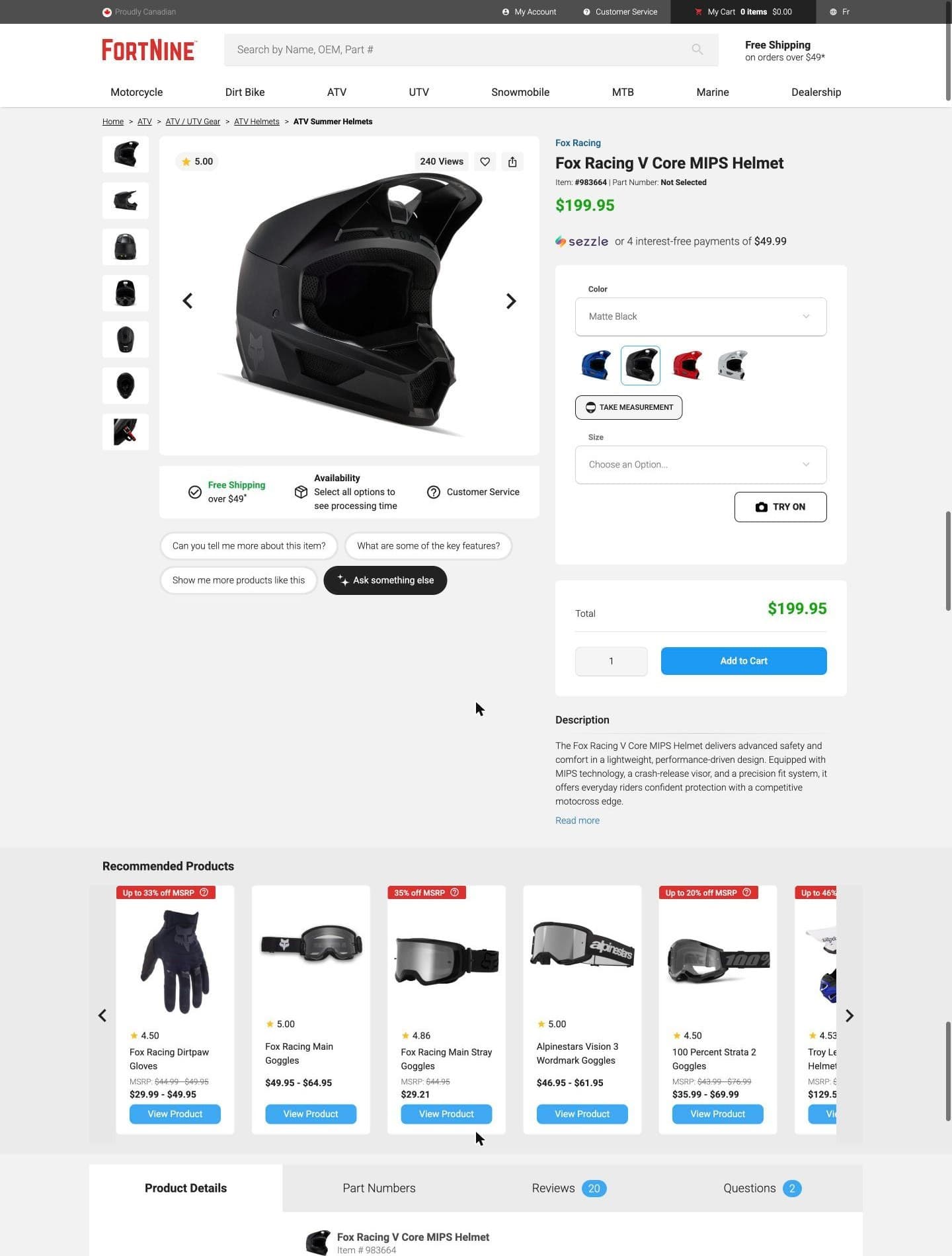
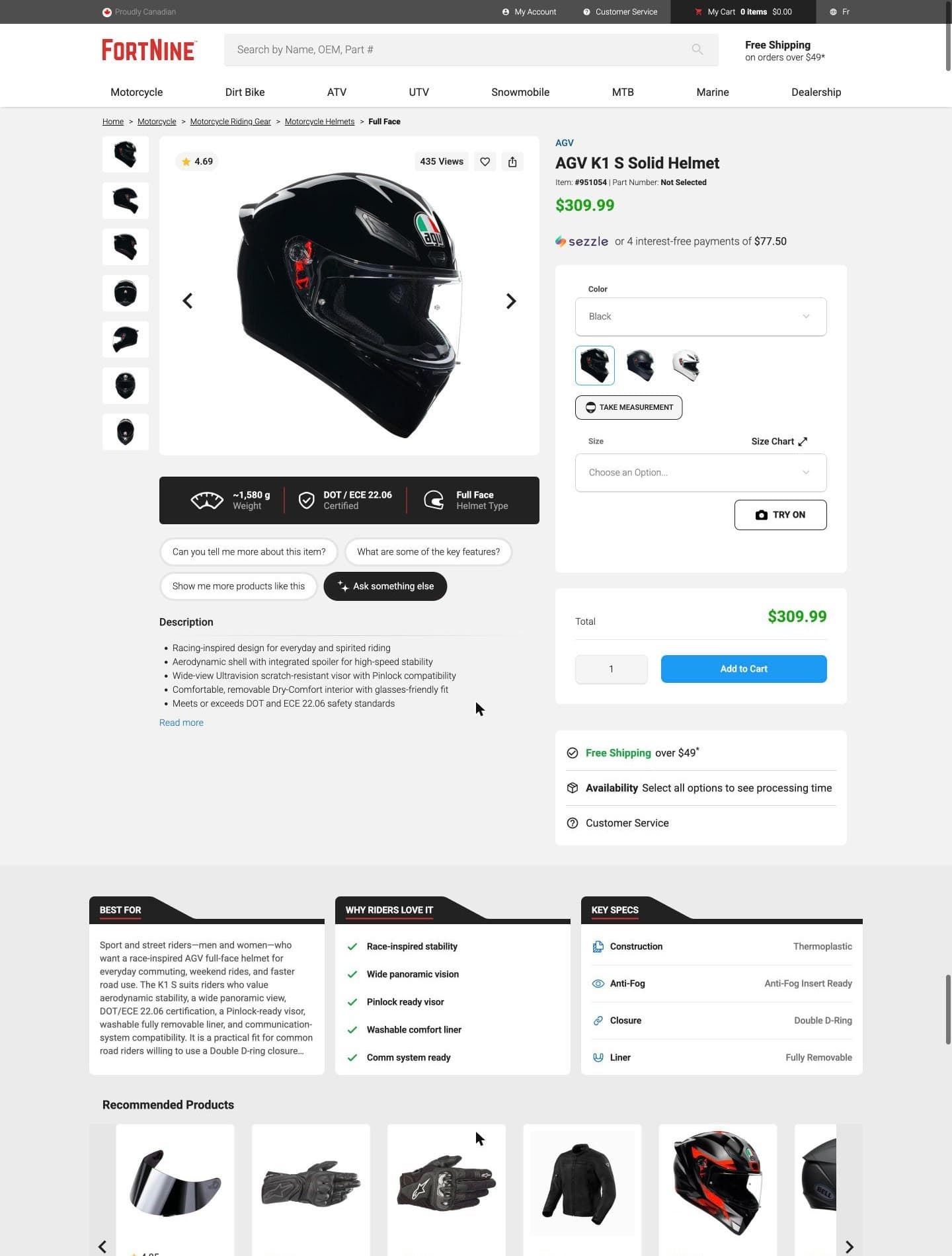
Same store, same page, two templates
Drag the handle: old template on the left, new on the right. Tap a change to light it up. Both pages are shown whole, cut at the same height.
The solution · up close
Four blocks, cut out of the live template
The four changes from the comparison above, up close. Each block is the real component, unretouched, with its old counterpart where one existed.
Decision spec strip
Moved up

What it answers: the three numbers a rider compares first (how heavy, which certification, which type) without scrolling. The logistics strip moved into the buy box.
Description
Rewritten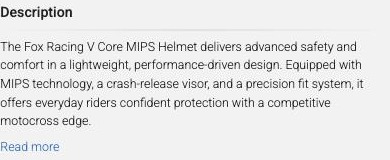
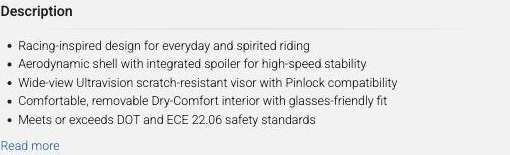
What it answers: what the product is for and what it is made of, in five lines a shopper can scan on a phone.
Best for · Why riders love it
Added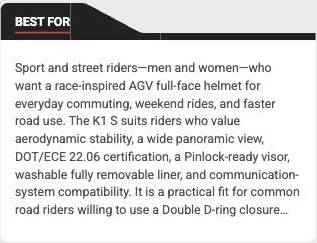
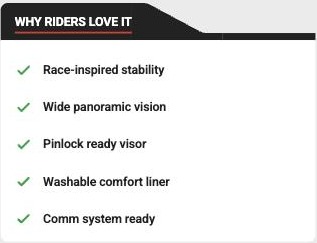
What it answers: whether this product is for this rider, including who it is not for, and the five reasons people who own it keep it. Neither block existed on the old template.
Key specs
Moved up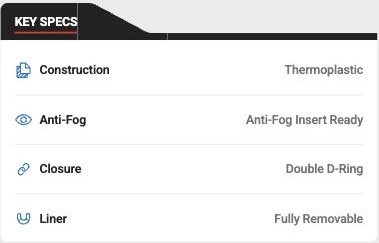
What it answers: the four specs that decide a helmet purchase, pulled out of the Product Details tab where the old template kept them.
The four blocks went live on the helmet pages. Gallery, buy box and comparison chart did not move (the test isolates the decision content) and FortNine watched one number: add-to-cart.
The result
add-to-cart on helmet product pages in the last 90 days
FortNine-reported, validated by Ramzi.
“We partnered with Zenyt.ai to build persona-driven agents that continuously crawl our site and flag the friction points real customers hit. It’s like having our customers’ eyes on the site at all times, they catch what we’d miss.”
 RamziChief Product Officer, FortNine
How the solution runs
Two agents, then a loop
What goes in
Two things. The public product pages on fortnine.ca and defender.ca, read as a shopper reads them: gallery, spec strip, description, tabs, fitment, variants, cart, checkout. And a set of persona definitions: for moto, the sport rider, street commuter, adventure tourer, first-time motorcyclist and vehicle-specific parts buyer; for marine, the ground-tackle outfitter, first-time boat owner and electronics integrator.
Page level
PDP persona evaluation
- Decision-critical specs and claims
- Sizing, fit and materials
- Vehicle, vessel and model fitment
- Certifications and variant controls
Journey level
Flow simulation
- Search → filters → page → cart → checkout
- Fitment continuity across pages
- French and mobile paths
- Chatbot on Defender
What comes back
Every finding ties one persona’s decision to one missing or broken page element, with the URL, a screenshot, the persona and the impact on the purchase. Findings that repeat across a category become template recommendations rather than page fixes: if every helmet page hides its weight, the fix is the template, not the page. The journey agent runs the same goals end to end, because a page can be right and the path to it broken.
The same pass runs per category, then per storefront: what Measure returns feeds the next set of personas.
- 1
Define personas
Who buys this category, with what constraints.
- 2
Assign a goal
What each one must compare, verify or fit.
- 3
Evaluate
Read the page, or walk the full journey.
- 4
Capture evidence
URL, screenshot, persona, what they could not do.
- 5
Improve
Fix the page, or change the template.
- 6
Measure
A/B the affected pages, then go again.
Ramzi’s team now runs the same pass on Defender, the group’s marine storefront.All customer stories