Customer stories → New York & Company

How New York & Company gained full site visibility before Black Friday by letting AI agents check their store end-to-end
Within days, Zenyt's AI agents were monitoring key areas of the site.



Challenge
New York & Company Before Zenyt
“After years of living inside ecommerce platforms, it honestly felt like seeing our site through customer eyes for the first time.”
Laura Cantor • VP Marketing & Ecommerce at New York & Company
Just weeks before Black Friday, New York & Company completed a major migration from Hydrogen to Liquid. The timing was aggressive, but the team was confident. Then reality set in.
With 100+ SKUs refreshed and thousands of pages updated, the QA burden was massive. The e-commerce team ran their standard checks, but the truth every fashion retailer knows: there’s no realistic way to manually browse every page, every collection, every variant.
Issues were out there. They just had no visibility into what customers were actually experiencing.
Zenyt impact
Measurable Results That Speak for Themselves
Within weeks of deploying Zenyt, New York & Company achieved full visibility heading into their most critical selling period:
“No team, no matter how strong, can catch this manually. What shocked me wasn't just what the AI found, but how it prioritized. It said, 'Here's what's costing you the most first.”
Laura CantorVP Marketing & Ecommerce at New York & CompanyImpact
Impact Timeline
Spotlights
What the agents caught
Every spotlight below is shown with the screenshot published on the live New York & Company case study.
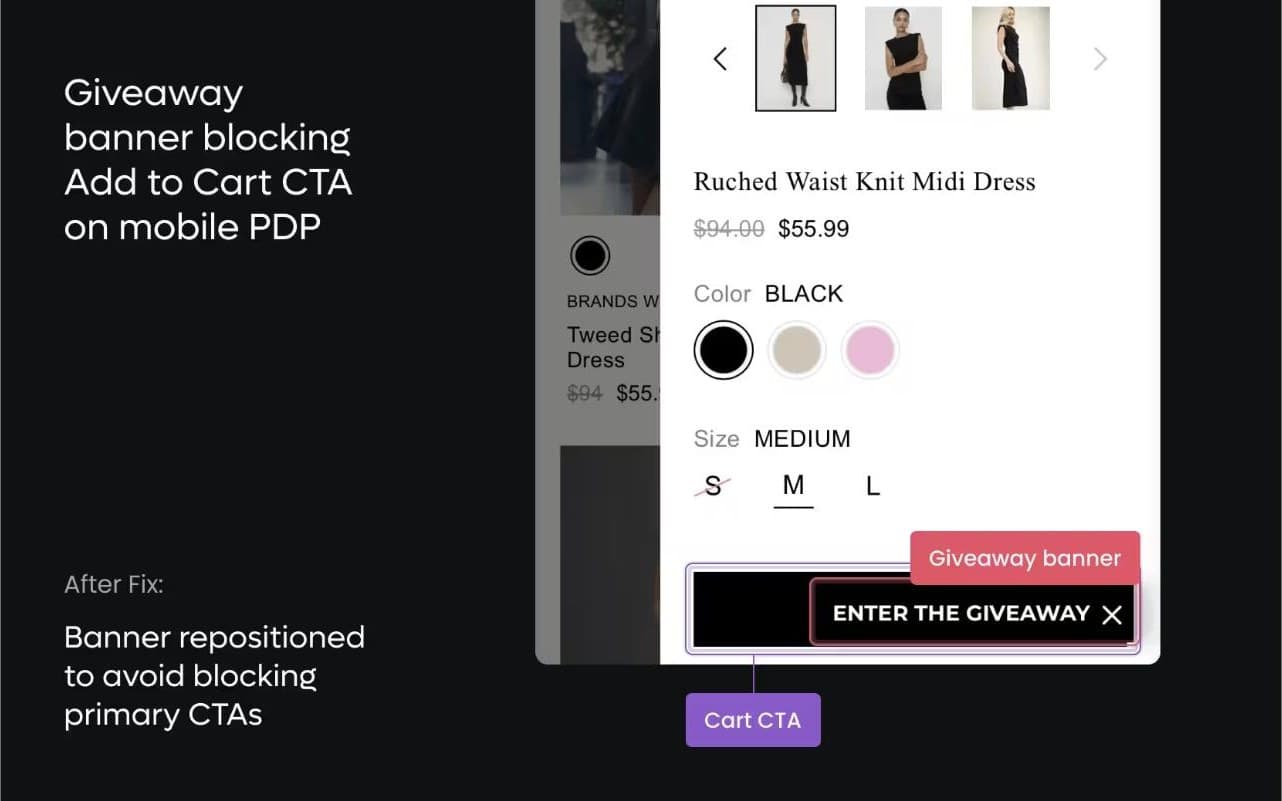
On mobile product detail pages, a persistent “ENTER THE GIVEAWAY” banner at the bottom of the screen was overlaying the Add to Cart button. Customers couldn’t complete purchases without first dismissing the banner, creating unnecessary friction during peak mobile traffic.
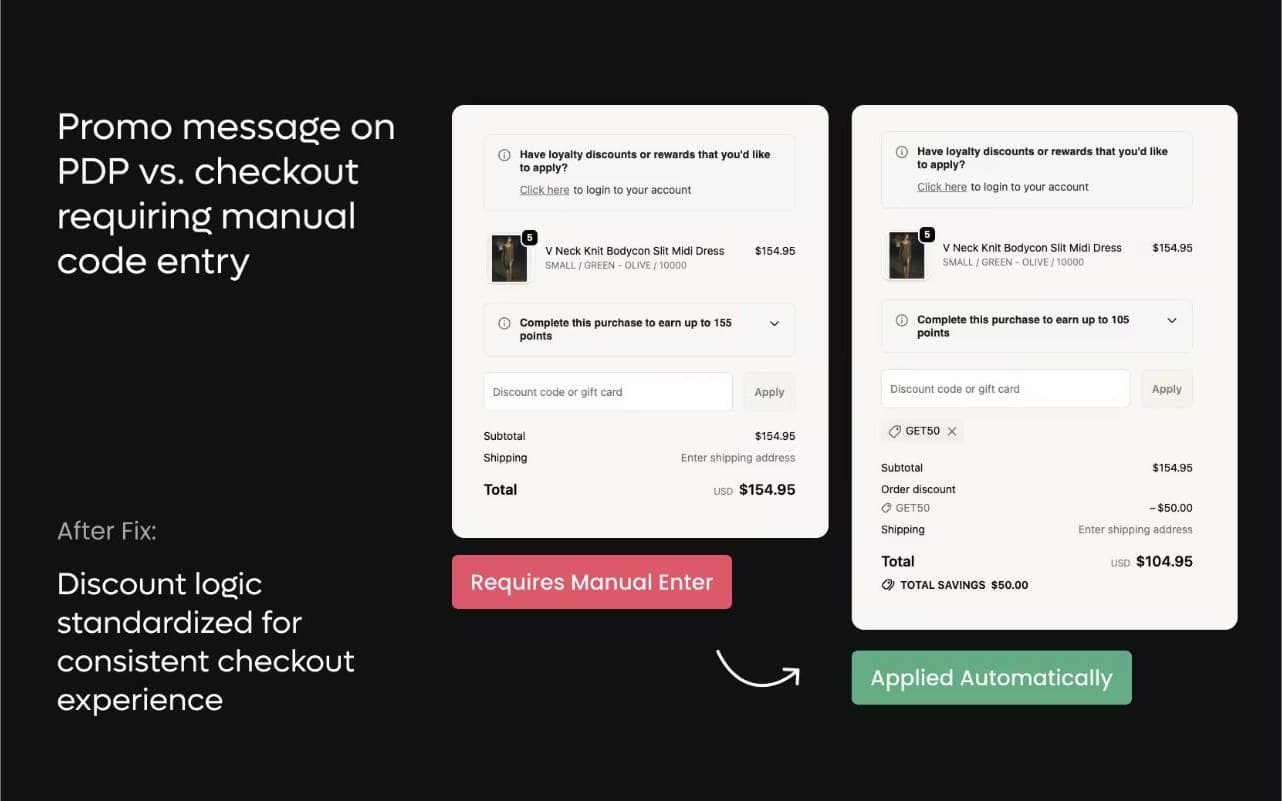
Product pages advertised stacked offers ($50 OFF $150 with code GET50, $75 OFF $200 with code GET75). Some carts applied discounts automatically, while others required customers to manually enter the code, an inconsistent experience that created confusion during checkout.
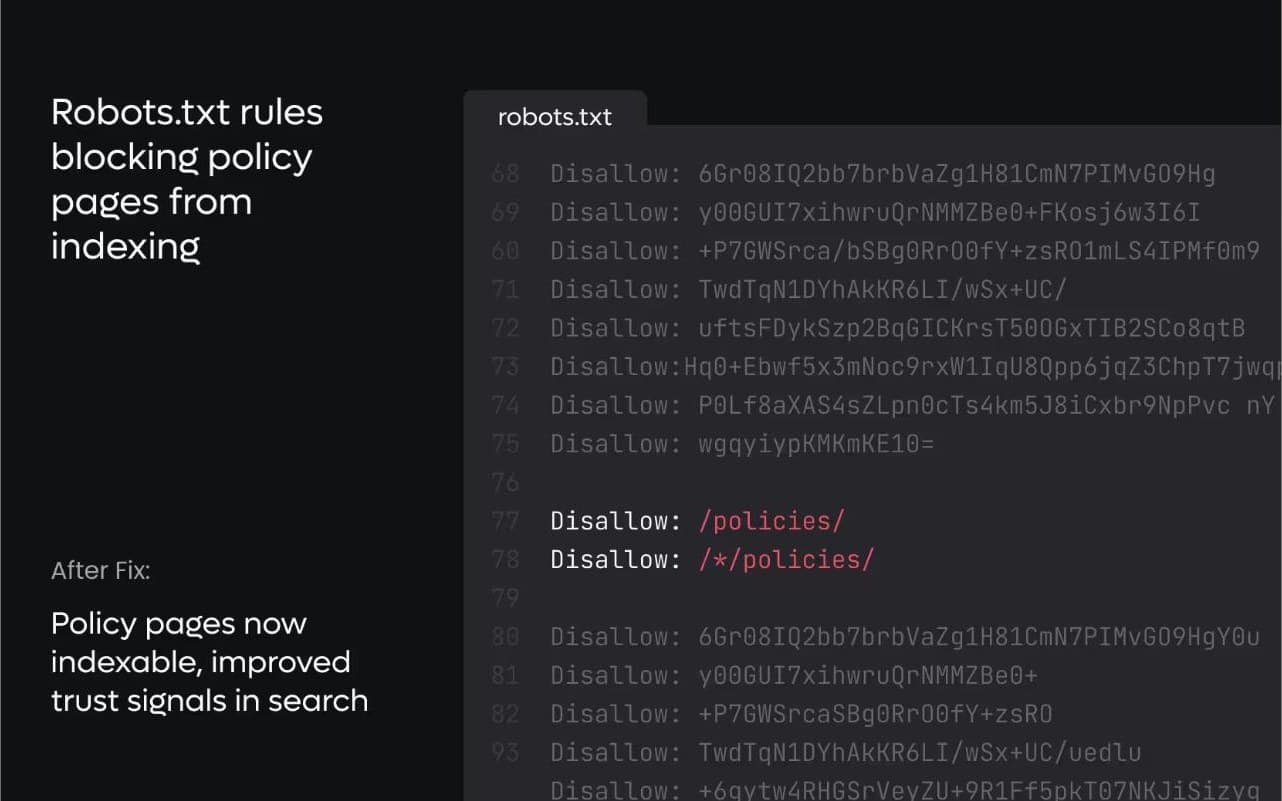
The robots.txt was blocking /policies/ paths completely, preventing Google from indexing shipping, returns, and privacy pages. These policy pages provide critical trust signals for fashion shoppers and support Google Ads compliance.
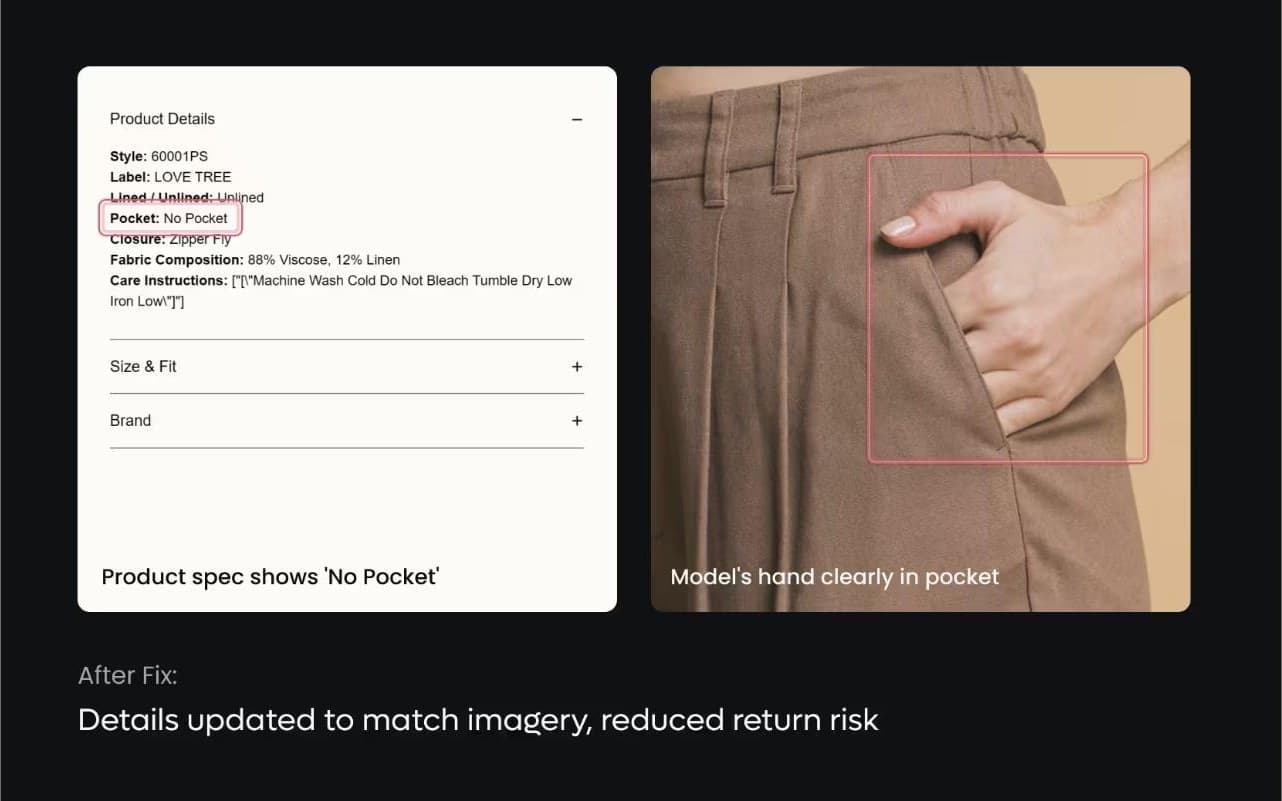
The product listed “Pocket: No Pocket” in product details, but images clearly showed the model with her hand in a side seam pocket. In fashion, these mismatches erode trust and drive returns.